199 Clock Riddles That Will Test Your Logic and Time Skills

Clock riddles challenge your mind to think about time, numbers, and logic in creative ways. These brain teasers range from simple questions for kids to complex puzzles that will test even sharp thinkers. Each riddle helps improve your problem-solving skills while exploring the fascinating mechanics of clocks and timekeeping. Grab a moment to solve these puzzles that will make you look at your watch in a whole new way.
Table of Contents
1. Easy Clock Riddles for Kids

- What has hands but cannot clap? Answer: A clock
- What has a face but no eyes, mouth, or nose? Answer: A clock
- What runs but never walks? Answer: A clock
- I have numbers but I’m not a phone. What am I? Answer: A clock
- What goes tick-tock but isn’t alive? Answer: A clock
- What has two hands but no arms? Answer: A clock
- I tell you when to wake up. What am I? Answer: An alarm clock
- What can tell time without talking? Answer: A clock
- What has twelve numbers in a circle? Answer: A clock face
- I hang on the wall and help you not be late. What am I? Answer: A wall clock
- What moves around in circles all day? Answer: Clock hands
- What has a big hand and a little hand? Answer: A clock
- I ring in the morning to wake you up. What am I? Answer: An alarm clock
- What tells time but has no mouth? Answer: A clock
- What keeps going around but stays in one place? Answer: A clock
- I have sixty little marks around my face. What am I? Answer: A clock
- What ticks away the seconds of your life? Answer: A clock
- What can be digital or have hands? Answer: A clock
- I sit on your nightstand and beep loudly. What am I? Answer: An alarm clock
- What points at numbers all day long? Answer: Clock hands
- I’m round like a pizza but show the time. What am I? Answer: A clock
- What has Roman numerals on its face? Answer: A traditional clock
- I chime every hour. What am I? Answer: A grandfather clock or chiming clock
- What needs batteries or winding to work? Answer: A clock
- I’m small enough to wear on your wrist. What am I? Answer: A watch
- What shows AM and PM? Answer: A clock
- I have three hands but no fingers. What am I? Answer: A clock with a second hand
- What can be cuckoo? Answer: A cuckoo clock
- I measure hours, minutes, and seconds. What am I? Answer: A clock
- What hangs on the wall and ticks? Answer: A wall clock
- I’m found in almost every room. What am I? Answer: A clock
- What helps you know when it’s bedtime? Answer: A clock
- I have gears inside me that turn. What am I? Answer: A mechanical clock
- What shows numbers from 1 to 12? Answer: A clock face
- I can be wound up with a key. What am I? Answer: A wind-up clock
- What tells you when school starts? Answer: A clock
- I’m shaped like a circle and show time. What am I? Answer: A clock
- What needs to be set to the right time? Answer: A clock
- I can be loud or silent. What am I? Answer: A clock
- What helps teachers know when class ends? Answer: A classroom clock
Recommended: 299+ Fun and Tricky Chinese Riddles
2. Tricky Logic and Math Clock Riddles
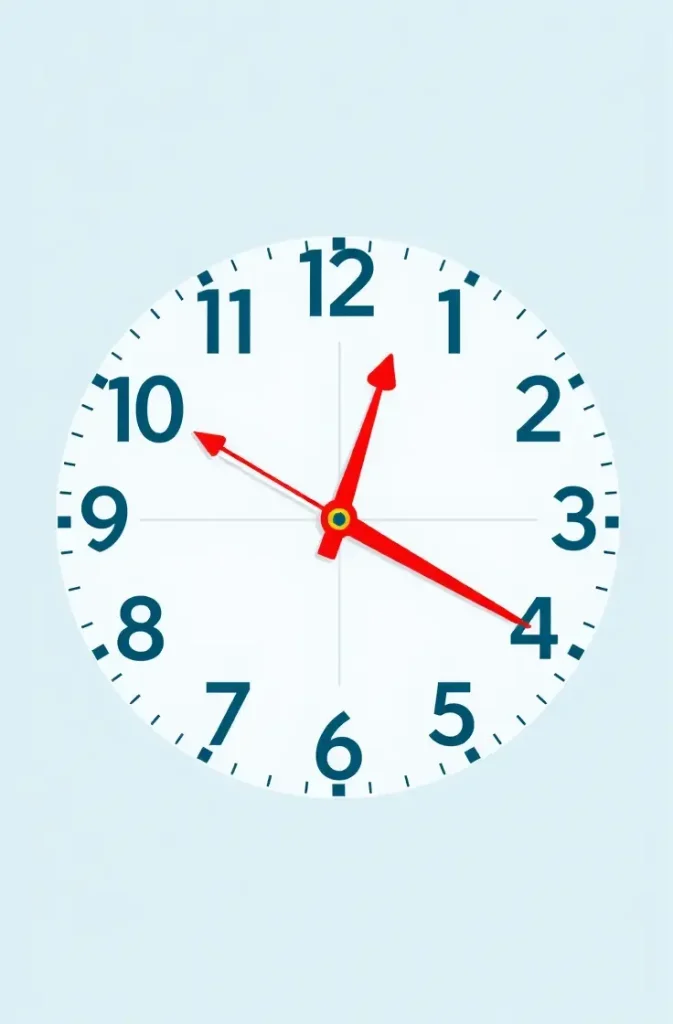
- If a clock takes 5 seconds to strike 5, how long to strike 10? Answer: 11.25 seconds (there are 4 intervals between 5 strikes, 9 between 10)
- What time is it when the clock strikes thirteen? Answer: Time to fix the clock
- How many times do clock hands overlap in 24 hours? Answer: 22 times
- At 3:00, what angle do the hands make? Answer: 90 degrees
- At 3:15, what’s the angle between the hands? Answer: 7.5 degrees
- How many degrees does the minute hand move in 20 minutes? Answer: 120 degrees
- A clock loses 15 minutes every hour. When will it show the correct time again? Answer: After 48 hours
- What time is spelled the same forwards and backwards? Answer: Noon
- How many times does the minute hand pass the hour hand daily? Answer: 22 times
- At 6:00, what angle exists between the hands? Answer: 180 degrees
- If the hour hand is on 4 and minute hand on 12, what time is it? Answer: 4:00
- A clock gains 5 minutes every hour. After 12 hours, how much time has it gained? Answer: 60 minutes (1 hour)
- What’s the angle at 9:00? Answer: 90 degrees
- Between 2 and 3 o’clock, when are the hands together? Answer: Approximately 2:10:54
- How many right angles do clock hands make in 12 hours? Answer: 22 right angles
- At what time between 3 and 4 are the hands opposite? Answer: Approximately 3:49
- A clock shows 3:30. What’s the angle between the hands? Answer: 75 degrees
- How many degrees does the hour hand move in one hour? Answer: 30 degrees
- If both hands point at 12, what time is it? Answer: 12:00 (noon or midnight)
- At 7:00, what’s the smaller angle between the hands? Answer: 150 degrees
- How many times are the hands at right angles in 12 hours? Answer: 22 times
- A clock runs backwards. At 3:00, where does it point? Answer: 9:00
- What’s the angle at 1:00? Answer: 30 degrees
- Between 4 and 5, when do hands make a straight line? Answer: Approximately 4:54
- How many complete rotations does the minute hand make in 24 hours? Answer: 24 rotations
- At 2:20, what’s the approximate angle between hands? Answer: 50 degrees
- A clock’s hands move independently. Can they ever overlap at 6:30? Answer: Not if the clock works properly
- What’s the angle at 10:00? Answer: 60 degrees
- How many degrees apart are the numbers on a clock? Answer: 30 degrees
- If the minute hand is at 6 and hour hand at 3, what time is it? Answer: 3:30
- Between 1 and 2, when are the hands exactly opposite? Answer: Approximately 1:38
- A clock face is a circle. How many degrees in total? Answer: 360 degrees
- At 5:30, what’s the angle between the hands? Answer: 15 degrees
- How many times do the hands form acute angles daily? Answer: Multiple times throughout the day
- What’s the angle between consecutive numbers? Answer: 30 degrees
- If a clock shows 8:20, what’s the angle? Answer: 130 degrees
- Between 11 and 12, when do hands overlap? Answer: Exactly at 12:00
- How fast does the second hand move per second? Answer: 6 degrees per second
- At 4:40, what’s the angle between the hands? Answer: 100 degrees
- A mirror reflects a clock showing 3:00. What time does it appear? Answer: 9:00
3. Advanced Time and Pattern Riddles
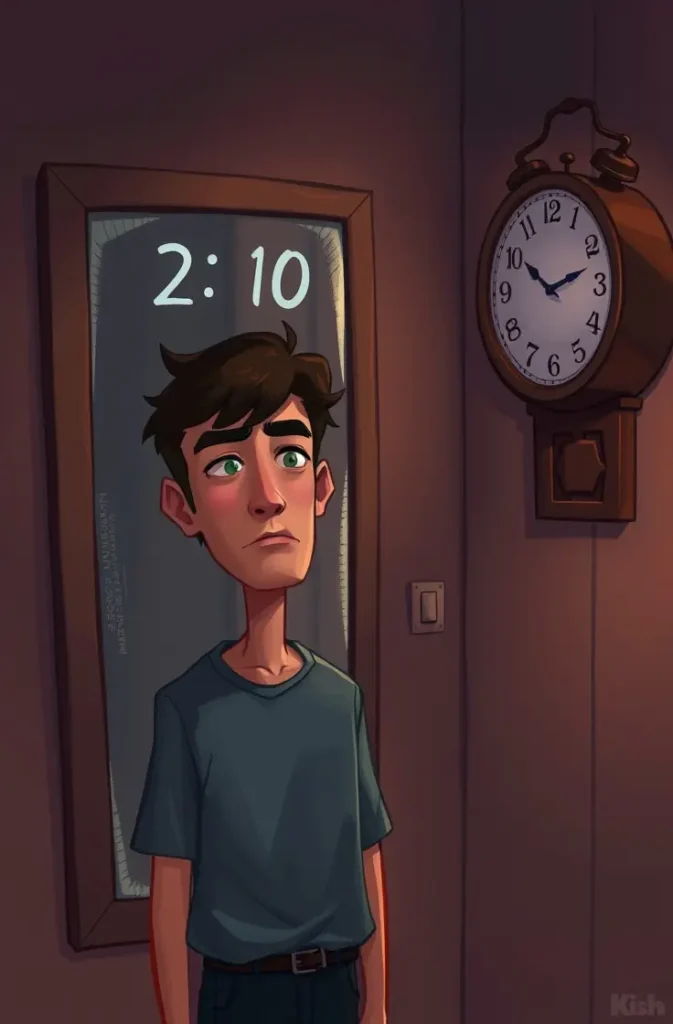
- I show 2:10 in the mirror. What’s the actual time? Answer: 9:50
- Three clocks strike together at noon. One strikes every 3 hours, one every 4 hours, one every 6 hours. When do all three strike together again? Answer: Midnight (12 hours later)
- A broken clock is correct twice a day. A slow clock is correct how often? Answer: Once every few years (depends on how slow)
- If you turn a clock upside down at 3:30, what does it show? Answer: Still 3:30 (numbers are upside down)
- A clock runs at half speed. At actual noon, what does it show? Answer: 6:00
- Two clocks start at 12:00. One gains 1 minute per hour, one loses 1 minute. When will they show the same time again? Answer: Never (they drift apart)
- A clock chimes the hour number (1 chime at 1:00, 2 at 2:00). How many chimes in 12 hours? Answer: 78 chimes
- If you see 12:21 on a digital clock, when’s the next palindrome time? Answer: 1:01
- A clock gains 2 minutes every 24 hours. How many days until it’s 1 hour fast? Answer: 30 days
- What’s special about 12:34:56? Answer: Sequential numbers
- A clock’s hour hand broke off. Can you still tell exact time? Answer: Only at certain positions of the minute hand
- If all numbers fell off a clock, could you still tell time? Answer: Yes, by the hand positions
- A 24-hour clock shows 13:00. What’s this in 12-hour format? Answer: 1:00 PM
- Two people check a clock at different times. One sees 2:15, the other 3:45. How much time passed? Answer: 1 hour 30 minutes
- A clock stops at 3:17. Will it show the correct time again today? Answer: Yes, at 3:17 (AM or PM)
- How many times does a digital clock show all even digits in 24 hours? Answer: Multiple times (like 0:00, 2:00, 20:00, 22:00, etc.)
- What’s the longest time you can write using only the same digit? Answer: 11:11
- A clock’s minute hand is missing. At 3:00, how do you know the exact time? Answer: The hour hand points directly at 3
- If Earth rotated backwards, would clocks run backwards? Answer: No, clocks are mechanical/electronic devices
- A sundial shows 2:00. A regular clock shows 3:00. Which is right? Answer: Depends on daylight saving time and location
- Three clocks show 2:00, 2:15, and 2:30. What’s the average time? Answer: 2:15
- A clock runs 10% fast. At actual 12:00, what does it show? Answer: Depends on starting point
- You see a clock tower from a mile away showing 3:00. What time is it really? Answer: Slightly past 3:00 (light travel time is negligible)
- A clock with no 7 shows all other numbers. Can it still work? Answer: Yes, you can deduce where 7 should be
- If minutes and hours switched places, what chaos would occur? Answer: Time would be impossible to read correctly
- A clock goes backwards at normal speed. Starting at 12:00, where is it at actual 3:00? Answer: 9:00
- Two synchronized clocks separate. One stays, one goes on a fast plane. Which is slower? Answer: The plane clock (time dilation)
- A clock with only an hour hand shows it pointing between 3 and 4. What time could it be? Answer: Any time from 3:00 to 3:59
- Digital clock shows 10:08. Next time with same digits in different order? Answer: 10:80 doesn’t exist, so 1:08 or 8:01
- A clockmaker has all parts except the 6. What does he use? Answer: Turn a 9 upside down
- How many seconds in angles are there around a clock? Answer: 360 (degrees)
- A clock’s battery dies at 7:38. When you replace it at 9:15, what should you set it to? Answer: The current time, 9:15
- If time zones didn’t exist, would all clocks show the same time? Answer: Yes, but local sun position would vary
- A clock in a spaceship travels near light speed. What happens to it? Answer: It runs slower relative to Earth
- You film a clock for 12 hours in 1 minute. How fast do hands move? Answer: 720 times normal speed
- A backwards clock starts at 12. Where is the minute hand after real 15 minutes? Answer: At the 3 (or 9 position going backwards)
- How many times does 3 appear on a 12-hour clock in 12 hours? Answer: Once on the face, but the hands point there multiple times
- Two clocks race. One ticks twice per second, one once. Which shows more time passing? Answer: Same time, just different tick rates
- A broken clock loses its minute hand. At 6:00 sharp, what can you see? Answer: Hour hand pointing at 6
- If you count all numbers on a clock face, what’s the sum? Answer: 78 (1+2+3+4+5+6+7+8+9+10+11+12)
4. Wordplay and Clever Clock Riddles
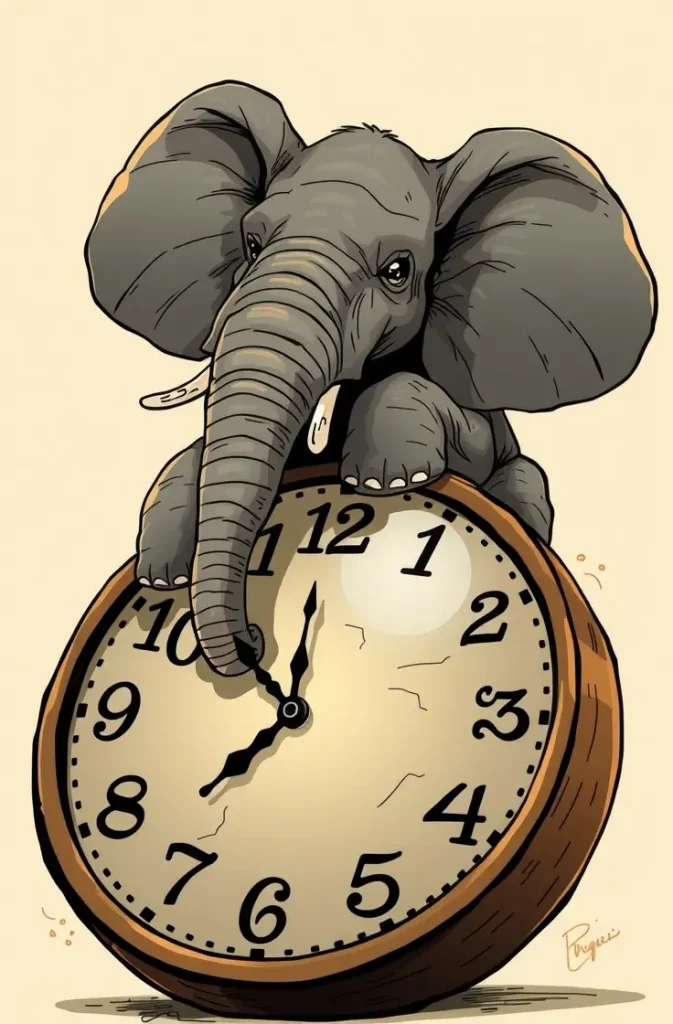
- What time is it when an elephant sits on a clock? Answer: Time to get a new clock
- What do you call a story about a broken clock? Answer: A waste of time
- Why did the clock go to the principal’s office? Answer: For tocking too much
- What did the digital clock say to its mother? Answer: Look, Ma! No hands!
- Why did the man sit on his clock? Answer: He wanted to be on time
- What do you call a belt made of watches? Answer: A waist of time
- Why did the clock get kicked out of class? Answer: It kept tocking back
- What’s a clock’s favorite type of music? Answer: Rock around the clock
- Why don’t clocks ever get hungry? Answer: They go back four seconds
- What did one clock say to another? Answer: We’ve got time on our hands
- Why was the clock nervous? Answer: Its hours were numbered
- What do you call a grandfather clock? Answer: An old timer
- Why did the clock break up with the calendar? Answer: It needed more time alone
- What’s a clock’s least favorite month? Answer: March (it has to spring forward)
- Why don’t clocks go to college? Answer: They already have too many hours
- What did the watch say to the late student? Answer: You need to watch the time
- Why was the clock tired? Answer: It was all wound up
- What do you get when you cross a clock with a chicken? Answer: A cluck that tells time
- Why did the alarm clock go to therapy? Answer: It had trouble letting go of the past
- What’s a clock’s favorite game? Answer: Tick-tac-toe
- Why don’t secrets last around clocks? Answer: Time tells all
- What did the stopwatch say to the regular clock? Answer: You’re so second-rate
- Why was the clock always happy? Answer: Every second was a happy second
- What do you call a clock on the moon? Answer: A lunar-tick
- Why did the student eat his clock? Answer: He wanted to have seconds
- What’s faster than a speeding clock? Answer: Time
- Why don’t clocks make good friends? Answer: They’re too hands-off
- What did the baby clock call its parents? Answer: Mama-tick and Papa-tick
- Why was the clock confused? Answer: It lost track of time
- What do you call a timepiece that’s always right? Answer: Clock-urate
- Why did the clock join a band? Answer: It had great timing
- What’s a clock’s favorite snack? Answer: Hour d’oeuvres
- Why don’t clocks ever lie? Answer: They’re always telling time
- What did the clock say at midnight? Answer: Time to start over
- Why was the sundial jealous of the regular clock? Answer: It only worked part-time
- What do you call a lazy clock? Answer: Slow motion
- Why did the clock go to the gym? Answer: To work on its face
- What’s a clock’s favorite exercise? Answer: Running
- Why don’t clocks play hide and seek? Answer: They’re always spotted
- What did the clock say to the stressed person? Answer: Take your time
See also: 99 Telephone Riddles Only Smart Minds Can Answer
5. Challenging Expert-Level Clock Riddles

- A clock factory produces clocks that gain 1 second every 10 hours. After 30 days, how much time has it gained? Answer: 7.2 minutes
- If you could travel at the speed of light around Earth’s equator, how many times would you circle it in one tick of a second hand? Answer: About 7.5 times
- A clock’s hands are exactly opposite at 6:00. When’s the next time they’re exactly opposite? Answer: Approximately 7:05:27
- In a room with 100 clocks all showing different times, what’s the probability two show the exact same second? Answer: Depends on distribution, but relatively low
- A quantum clock measures time to the attosecond. How many attoseconds in one regular second? Answer: 1 quintillion (10^18)
- If you stack 60 clocks, each 1 inch thick, and remove one per minute, when is the stack gone? Answer: 60 minutes
- A clock’s mechanism has 100 gears. If one gear fails, what percentage still works? Answer: 99%, but the clock may not function
- Two clocks start synchronized. One is in Death Valley, one on Mt. Everest. Which runs faster? Answer: Death Valley (lower gravity potential)
- A clock loses 0.001 seconds per day. How long until it’s 1 minute slow? Answer: Approximately 164 years
- If Earth’s rotation slowed by 1%, how would it affect a 24-hour clock? Answer: Days would be longer, clock would seem fast
- A pendulum clock’s period is 2 seconds. If you take it to the moon, what’s the new period? Answer: Approximately 4.9 seconds (less gravity)
- How many atomic oscillations occur in one second of a cesium atomic clock? Answer: 9,192,631,770 oscillations
- A clock with friction loses energy. How does this affect timekeeping? Answer: It slows down gradually
- If you photograph a clock at 1/1000 second shutter speed, how far does the second hand move? Answer: 0.006 degrees
- A binary clock shows 1010:0011. What time is this? Answer: 10:03
- Two synchronized clocks separate. One orbits Earth for a year. Which aged less? Answer: The orbiting clock (time dilation)
- A clock’s quartz crystal vibrates at 32,768 Hz. Why this specific frequency? Answer: It’s 2^15, easy to divide down to 1 Hz
- If you could stop time, would your clock still work? Answer: Paradox, if time stops, nothing works
- A grandfather clock’s pendulum is 1 meter long. What’s its period? Answer: About 2 seconds
- At what altitude does a clock run measurably faster than sea level? Answer: Even small altitudes show difference with atomic precision
- A clock in a GPS satellite runs how much faster per day than one on Earth? Answer: About 38 microseconds faster
- If you shrink a clock to half size, how does it affect timekeeping? Answer: Depends on mechanism; pendulum would run faster
- A water clock loses water at 1ml per minute. With 1 liter, how long does it last? Answer: 1000 minutes (16.67 hours)
- Two clocks are entangled quantum mechanically. If you observe one, what happens? Answer: Theoretical question, current clocks aren’t quantum entangled
- A clock’s escapement mechanism releases once per second. How many releases in a year? Answer: 31,536,000 (in a non-leap year)
- If you accelerate a clock to 50% light speed and return it, how much less has it aged? Answer: Calculable via time dilation formula, significantly less
- A biological clock in cells cycles every 24 hours. What if you’re in constant darkness? Answer: It free-runs at roughly 24 hours
- How many Planck times (smallest possible time unit) are in one second? Answer: Approximately 10^43 Planck times
- A clock powered by radioactive decay uses what principle? Answer: Consistent half-life decay rate
- If you compress spacetime around a clock, what happens to its rate? Answer: It slows down (gravitational time dilation)
- A mechanical clock has 1000 parts. What’s the MTBF (mean time between failures)? Answer: Depends on quality, typically years to decades
- Two observers moving at different speeds look at the same clock. Do they see the same time? Answer: No, due to relativity
- A clock measures femtoseconds. How many in one minute? Answer: 6 × 10^16 femtoseconds
- If you could rewind a clock’s entropy, would time reverse? Answer: Philosophical/physics question, entropy defines time’s arrow
- A torsion pendulum clock runs for 400 days per winding. What’s its Q factor? Answer: Very high, indicating low energy loss
- How does temperature affect a pendulum clock’s accuracy? Answer: Heat expands the pendulum, slowing it down
- A clock in a black hole’s event horizon appears to an outside observer to do what? Answer: Stop completely (infinite time dilation)
- If you built a clock using only light pulses bouncing between mirrors, how would you calibrate it? Answer: Distance between mirrors divided by speed of light
- A perfect clock in a vacuum at absolute zero would still face what limitation? Answer: Quantum uncertainty (Heisenberg uncertainty principle)
Conclusion
Clock riddles offer an engaging way to strengthen logical thinking and deepen your understanding of time concepts. These 199 puzzles range from simple brain teasers perfect for children to complex problems that challenge experienced puzzle solvers. Practice these riddles regularly to boost your mathematical skills, improve pattern recognition, and develop a sharper mind.
Share them with friends and family to spread the joy of problem-solving and create fun learning moments together.